

Experiment 4 Public goods game
Are humans able to cooperate to achieve socially beneficial outcomes, or do they succumb to free-rider incentives? A classic public goods game where students must decide how much to contribute to a common pool. The game can be played with and without the possibility to punish free riders.
CORE projects
The experiment is covered in:
- Section 4.8 in The Economy 2.0: Microeconomics
- Section 4.7 in The Economy 1.0
- Section 2.9 in Economy, Society, and Public Policy
Concepts in the experiment are related to material in:
4.1 Introduction
Are humans able to cooperate to achieve socially beneficial outcomes, or do they succumb to free-rider incentives?
This activity presents a classic public goods game. Participants receive an endowment of tokens and they must decide how much to contribute to a common pool. The common pool is a productive public good that returns an equal proportion of the sum of contributions multiplied by a number greater than one. The game can be played with and without the possibility to punish free riders.
Experimental evidence shows that contributions tend to decrease through time. However, when people are allowed to punish free riders, contributions bump up and remain relatively constant. Predicted outcomes mirror the graphs in Figures 4.14b and 4.14c in The Economy 2.0: Microeconomics, Figures 4.9a and 4.9b in The Economy 1.0, and Figures 2.9a and 2.9b in Economy, Society, and Public Policy.
The experiment provides students with the experience of a social dilemma situation and gives them an insight into the motivations behind the choice of the individual actors, including free riding, altruism, reciprocity and the intention of cooperation. They can describe the factors that lead to the dilemma situation and analyze the reasons for a decline in contributions to the public good. In addition, it encourages initial intuitive ideas about solutions to the public goods problem.
You may find it useful to read about the experiences of instructors before getting into the detail of setting up the experiment, especially if you are new to running classroom experiments.
This experiment is based on Benedikt Herrmann, Christian Thoni, and Simon Gachter. 2008. ‘Antisocial Punishment Across Societies’. Science 319 (5868): pp. 1362–67.
How to cite this experiment
Giamattei, Marcus, and Humberto Llavador (2020). ‘Public goods game’. Experiment 4 in The CORE Team, Experiencing Economics. Available at https://www.core-econ.org/experiencing-economics/experiments/04-public-goods-game.html [Accessed on (date)].
Key concepts
This experiment will help students understand the following key concepts:
- Social dilemma
- Public good
- Free rider
- Social punishment
- Altruism
4.2 Requirements
Timing
The experiment can be run with or without punishment. Ten rounds without punishment can be easily run in 5–10 minutes, plus 10–15 minutes for instructions, which could also be sent to students before the class. The introduction of punishments requires some extra time, mainly because of the more detailed instructions. For example, five rounds without punishment followed by five rounds with punishments may add an extra 10–15 minutes, including instructions.
Remember to allow time for a stimulating discussion.
Resources
Instructors and students need a smartphone, tablet, or laptop that has a web browser and is connected to the internet. For in-class experiments, a projector is recommended to help with instructions, results, and discussion. The experiment will be run in classEx.
Number of participants
In our experience, the experiment works very well with groups of any size, and can be run in a classroom or online. A minimum of eight students is needed to have at least two groups. See ‘What might go differently?’ in Section 4.6 for how the results might differ when your group is either very small or very large.
4.3 Description of the experiment
In this experiment, students are divided into groups of four anonymous players and play 10 rounds of the same game. The composition of the group is maintained for all 10 rounds. In each round, students receive an endowment of 20 tokens and must decide how many tokens to contribute to a common project. The total amount of tokens contributed to the group’s project is multiplied by 1.6 and distributed equally among all four members. Therefore, each player receives 0.4 tokens for each token contributed to the project by any member. At the end of the round, students are told the total amount of tokens contributed to the project and their income (in tokens). Their income equals the number of tokens that each student kept for herself or himself plus the tokens she or he received from the project (the same for all four members).
You can choose to run some rounds with the option of costly punishments. Rounds with punishments incorporate a second stage in which, after seeing each member’s contribution, players decide whether to spend tokens in punishing others. Each token paid as punishment reduces the income of the member being punished by three tokens.
Most values, like the endowment, the return from the common project, or the number of rounds with the option of punishment, can be personalized by changing the parameters in classEx. Figure 4.1 in the next section provides details about the classEx parameters.
Note that your results are likely to inspire a lot of class discussion and that this discussion is at least as important as running the experiment, so make sure you also schedule plenty of time for that. classEx shows the results graphically immediately after the last round and stores them for later use. Therefore you can start the discussion as soon as the game is over or keep it for the next session.
4.4 Step-by-step guide
Detailed instructions
Go to the ‘Quick summary’ section if you have previously run the experiment and just need a brief reminder of the instructions.
We’ve provided two versions of the game. The simplest is a straightforward version of voluntary contributions to a public good (‘Public goods game without punishments’). This version is very easy and fast to run, and provides all the elements you need in order to discuss the key concepts: public good, free riding, reciprocity, altruism, and limits to altruism. If you have enough time, a more elaborate version incorporates the option to punish free riders (‘Public goods game with punishments’). It is still very easy to play, but the instructions are slightly more complex. However, it will provide the opportunity to discuss policy instruments and solutions to free riding and offer a more optimistic view of the social dilemma.
Public goods game without punishments
This is the simplest version of the game where students only need to decide how much to contribute (from 0 to 20 tokens) in each of the 10 rounds.
The parameters should be set to their default values if you have not changed them in a previous session. classEx remembers your last settings.
- Enter the ‘Public Goods Game’ in the ‘CORE’ tab in classEx. Click ‘play’.
- Check that the parameters correspond to your settings. This section uses the default settings (Figure 4.1), which should work well for most people. Make sure that the option ‘round where punishment begins’ shows the value 11, meaning that there are no rounds with punishments. See the ‘Advanced settings’ section for details if you want to change any of the parameters.
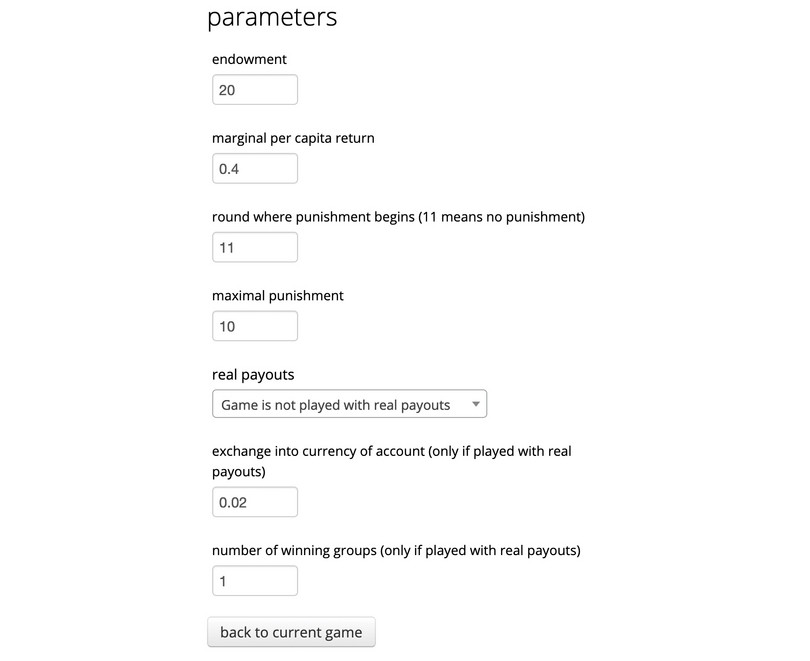
Figure 4.1 Default values of the classEx parameters. See the ‘Parameters’ section for a detailed explanation.
-
Once your students are logged into classEx, provide them with the student instructions in Section 4.5.
(Note that these are also available in the students’ version and can be distributed beforehand.)
You will find the general instructions on the instructor’s screen, as shown in Figure 4.2. Emphasize that students are not allowed to talk to each other or to make public announcements, no matter how tempting it may become. Tell students that they will have around 10 seconds to submit their contribution, but a bit longer for the first rounds.
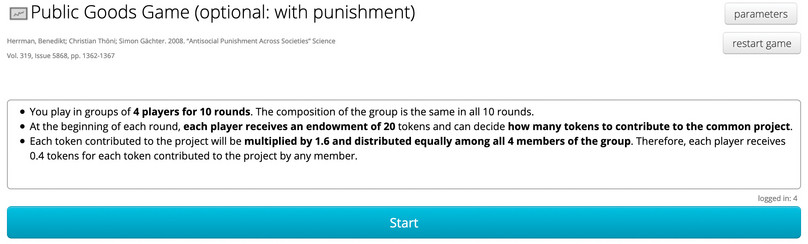
Figure 4.2 Instructions for the game, as displayed in the instructor’s screen on classEx.
If necessary, students can still log in while the first round is running, but not later than that.
- Before starting the first round, ask if there are any questions. Make sure that all students are logged in. Then start the first round by clicking the ‘Start’ button. Students will see on their devices the screen shown in Figure 4.3.
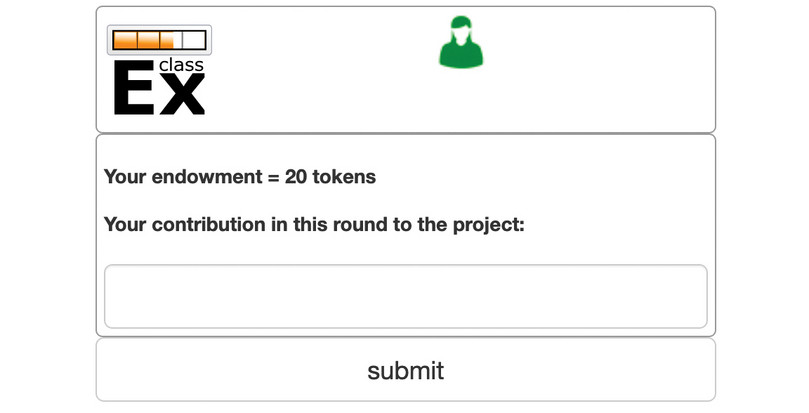
Figure 4.3 Student contribution screen for a round without punishments.
- Give students around 10 seconds to submit their contributions. Then end the round by clicking the ‘Results’ button. Students will receive feedback showing the results of this round and their cumulative income from all rounds (an example is shown in Figure 4.4).
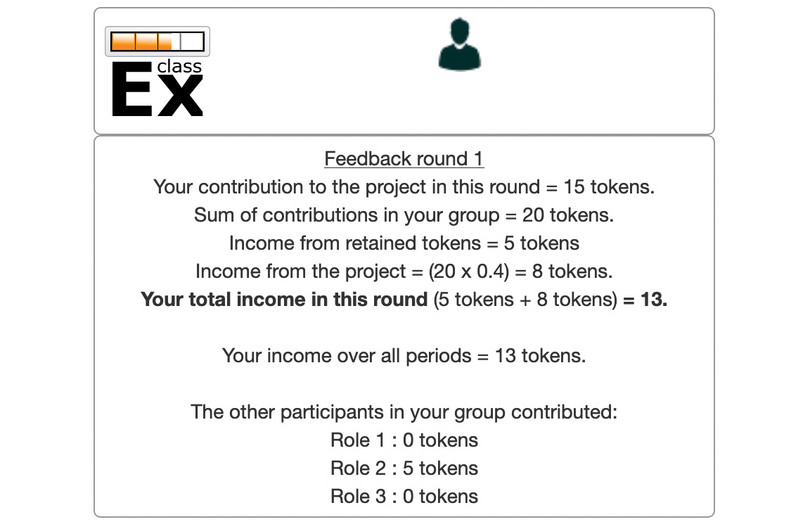
Figure 4.4 Feedback after Round 1 for a student who contributed 15 tokens. Another member of her group (Role 2) contributed to the project with five tokens. The other two members did not contribute.
- Give students time to read the information before starting the next round. You should provide enough time for students to process the information, but not so much that they start talking to each other. Normally, 20 seconds should be enough, but you may want to experiment and find what works best for your groups.
- Repeat steps 5 and 6 for the remaining rounds.
- The game finishes after 10 rounds. Show the graphs for the average contributions and the average contributions per group, and start the discussion.
Public goods game with punishments
Follow the steps described in the ‘Public goods game without punishments’ section, except for the following changes.
- First, you need to change the parameters in classEx to suit a game with punishment in some rounds. Go to parameters and in the box for ‘round where punishment begins’ specify the first round in which you want the option of punishment to be activated. For example, for an experiment with five rounds without punishments and five rounds with punishments, set the value of the parameter as 6. These instructions assume this structure.
- Follow steps 3–7 in the ‘Public goods game without punishments’ section for the rounds without punishments. To avoid students adapting their decisions in anticipation, do not explain the option of punishment yet.
- Before starting Round 6, the first round with punishments, get the students’ attention. Tell them that, from now on, each round will have a second stage where they can punish other members once they know their contributions. With the help of the instructor’s screen (Figure 4.5), explain the following instructions.
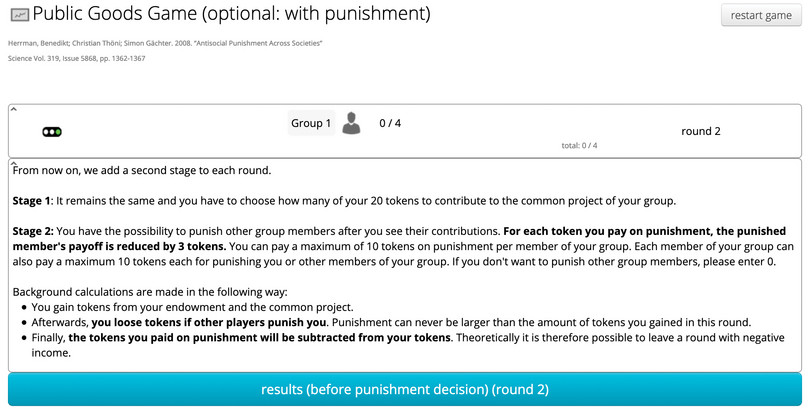
Figure 4.5 Instructions for punishing other members of the group.
Each round is now divided into two stages.
Stage 1 remains the same as before and students need to submit their contributions.
classEx requires players to enter the number of tokens they wish to pay to punish each of the other members. Players can enter 0 if they do not want to punish another member.
In Stage 2, after finding out how much each member in their group contributed and receiving the returns from the public good, students will be able to spend some of their tokens in punishing other members. Each token paid on punishing reduces the punished member’s payoff by three tokens. Comment that players must enter a ‘0’ if they do not want to punish another member.
Total payoff for the round equals:
\[\begin{align*} &\text{ gains (tokens kept + return from the public good)} \\ &− \text{ tokens lost from punishments} \\ &− \text{ tokens paid in punishing others}. \end{align*}\]There are two constraints for punishments. First, a student cannot be punished more than what she or he gained in the round (first row). Second, a student can spend a maximum of 10 tokens in punishing each member of her or his group, and the total expenditure in punishments cannot exceed her or his gains in that round. For example, a student who contributed 7 tokens, and the total contributions in her project were 15 tokens, would gain 19 tokens. This is calculated as tokens kept (13) + tokens from the project (15 × 1.6 ÷ 4 = 6). Therefore, the student can receive a maximum punishment of 19 tokens, and can spend a maximum of 19 tokens in punishing others, but no more than 10 tokens in punishing one member. A student may end up with negative income in the round if the tokens lost from the punishment received and the cost of punishing add up to more than the tokens gained.
- Start Stage 1 of Round 6 by clicking the ‘Start’ button. Students will submit their contributions as before (as shown in Figure 4.3).
- Start Stage 2 of Round 6 by clicking the ‘Results’ button, students will then receive information about the round, as the example in Figure 4.6 shows.
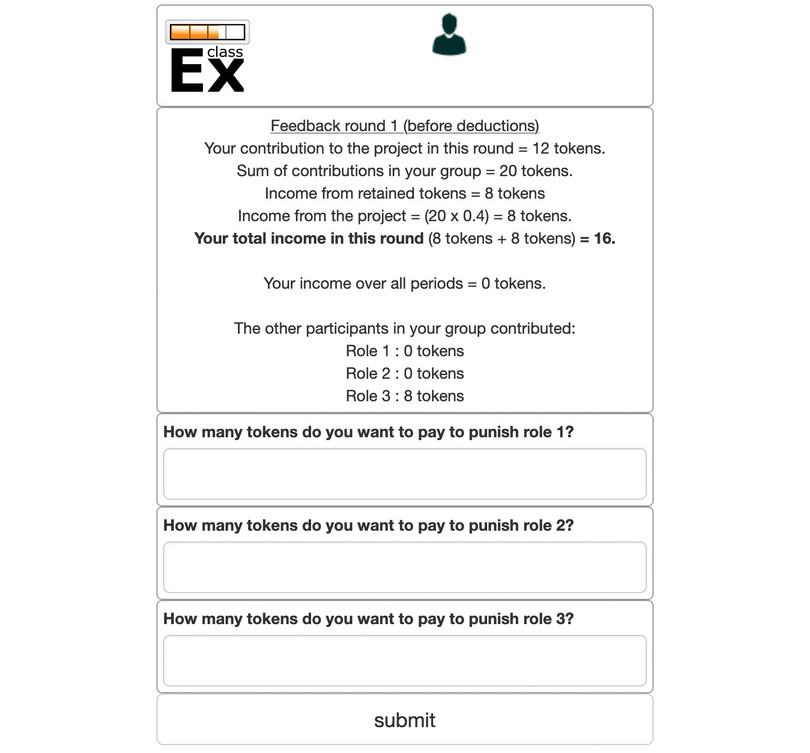
Figure 4.6 Stage 2. Students receive feedback on their income and the contributions of the other members in their group, and must decide how many tokens to spend, if any, in punishing each of them.
- Once students have submitted their punishments, repeat steps 4 and 5 for the remaining rounds.
- After the last round, show the graphs for the average contributions and the average contributions per group and start the discussion.
Find out more Advanced settings
This section is not necessary to run the experiment and the class discussion, it just provides further information on personalizing the classEx settings and parameters. You can skip it and go directly to the ‘Student instructions’ section if you just want to follow the standard settings, as we used in the ‘Public goods game without punishments’ and ‘Public goods game with punishments’ sections.
Parameters
classEx allows you to personalize many of the settings for the experiment by changing the parameters. Figure 4.7 presents the default values and an explanation of each of the parameters. Notice that the number of members in a group is fixed at 4 and cannot be changed. The number of rounds is also fixed, at 10, and cannot be changed. However, you can stop the experiment at any moment, effectively running fewer rounds, because at the end of each round both the instructor’s screen and the students’ screens report all the information up to that point.
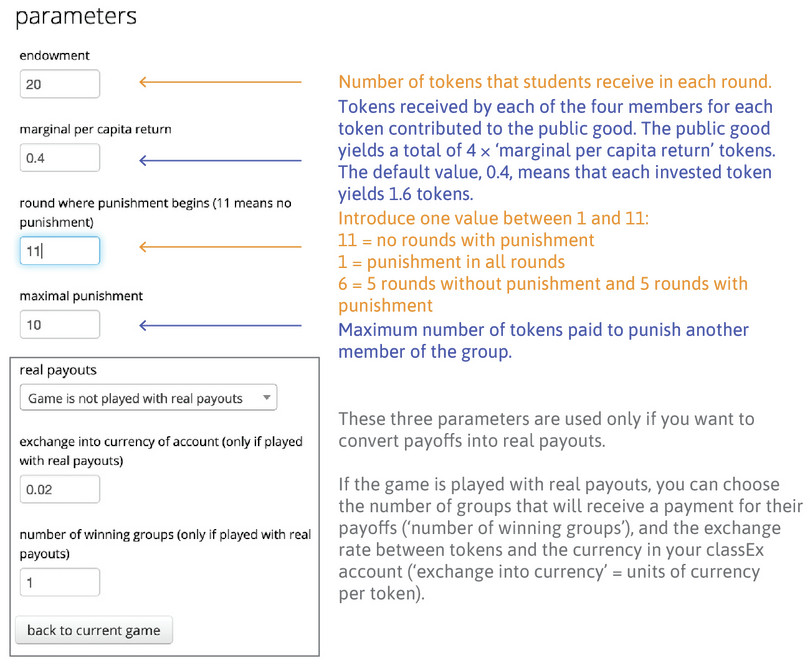
Figure 4.7 Explanation of the parameters. The figure presents the default values.
The last three parameters are only used if you want to reward some randomly chosen groups for their actual payoffs. First, set ‘game is played with payouts’ to activate this option. You can also set the number of groups who receive a reward (‘number of winning groups’), as well as the exchange rate for a token (for example, ‘exchange into euro’). At the end of the experiment, classEx identifies the selected groups, and members of those groups receive a ‘winning code’ that they can show to receive their reward.
Allocation of types
Students are randomly divided into groups of four members. If the number of participants in your group is not a multiple of four, classEx creates dummy players who will always choose to play the Nash-equilibrium strategy (that is, they contribute 0 to the public good in all rounds).
Downloading the data from your experiment
The data from your experiment is recorded by classEx and can be downloaded as an Excel file from the ‘data’ menu in the instructor’s screen. The Excel file can be downloaded at any time during the game or once it has finished. It will show all recorded data at the time of the download. Data can also be accessed later by opening the game again, selecting the corresponding session from the ‘previous results’ menu, and choosing the ‘download as Excel file’ option from the ‘data’ menu.
Each run is identified with a unique runID. The following table describes the most relevant variables included in the Excel file.
| Tab | Variables | |
|---|---|---|
| players | Information about participants.
|
|
| decisions | Information about decisions made by participants. Decisions are identified by playerID, round, and variable name. List of variables used in this experiment:
|
|
| globals | Information about parameters, like endowment, currency and maximum amount of punishment | |
| matching | Matching of playerIDs to groups | |
| contracts | [Empty for this experiment] | |
| payoffs | List of real payouts, together with a winning code (only for games played with this option) | |
| stagehistory | Internal code for tracking the progress of players throughout the stages of the game |
Quick summary
This section is intended for instructors who have previously run the experiment and only need a brief reminder of the instructions to get them going. It assumes that your students are already logged into classEx and ready to start the experiment.
Public goods game without punishments
- Check that the parameters are set according to your preferences. Figure 4.1 shows the default values for a session without punishments.
- Explain the instructions to your students (see Section 4.5 or the students’ version) and ask if there are questions. Remind the students that decisions are personal and that talking to each other or making public communications is not permitted. Do not mention that there will be some rounds with punishments, even if that is the case.
- Run the first round:
- Click the ‘Start’ button. Give students approximately 10 seconds to submit their contributions.
- End the round by clicking the ‘Results’ button. Students receive feedback on their earnings. Give them around 20 seconds to read the information before starting the next round.
- Repeat step 3 for the remaining rounds, slightly reducing the time for each round after a couple of rounds. Remember that after each round, students receive feedback on their earnings from that round, their cumulative payoffs, and the contributions of the other three members (anonymized).
- The game finishes after 10 rounds. After the last round, show the graphs for the average contributions and the average contributions per group and start the discussion as outlined in Section 4.7.
Public goods game with punishments
- Remember to set the parameters in the round in which the option to punish is activated, Figure 4.7.
- Follow steps 2–4 in the ‘Quick summary’, ‘Public goods game without punishments’ section above for the rounds without punishments.
- The instructor’s screen will show the new instructions before the first round with punishments. Explain the instructions and ask if there are any questions.
- Stage 1—Give students approximately 10 seconds to submit their contributions.
- Stage 2—Click the ‘Results’ button. Students receive before-punishment feedback (as before) and must decide how much to spend on punishing other members (from 0 to 10 tokens (or the value set in the parameters if you changed them)).
- After students have submitted their punishments, click the ‘Start’ button to start the next round. Students receive after-punishment feedback and must decide on their contribution.
- Repeat for the remaining rounds.
- There is a maximum of 10 rounds. Show the graphs for the average contributions and the average contributions per group and start the discussion.
4.5 Student instructions
These are also available in the students’ version.
A PDF of the student instructions and homework questions is also available.
This experiment consists of 10 rounds. You will be in a group of four students and will remain in the same group for all 10 rounds. You will not know who the other three members of your group are. In each round, you will receive 20 tokens and you must decide how many tokens to contribute in a project; you can contribute any number between 0 and 20 tokens. You will keep any remaining tokens for yourself. Your screen will look like Figure A.
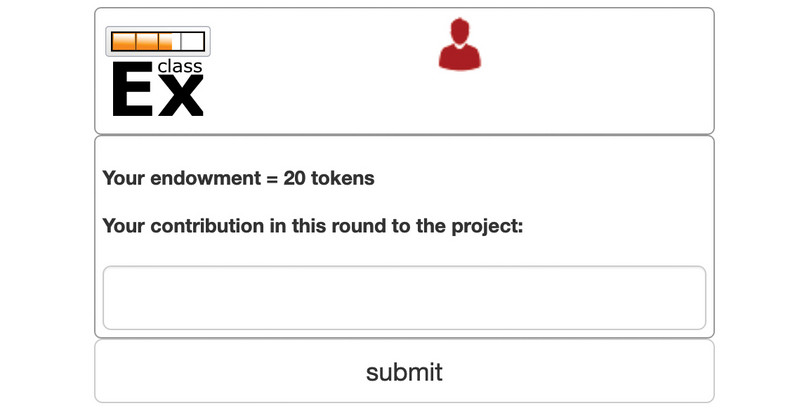
Figure A The classEx contribution screen
After all the members of your group have contributed, you will receive feedback on the total contribution to your project and on the tokens you gained in that round (your ‘income’), as well as the number of tokens you have accumulated so far (Figure B).
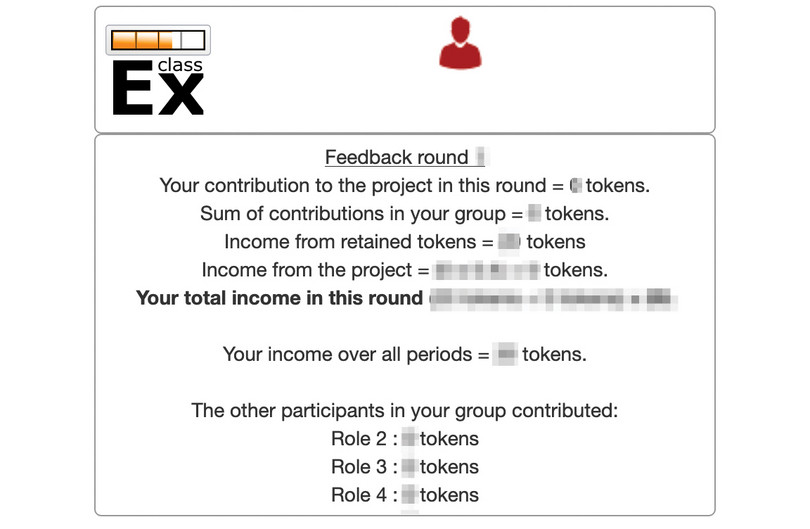
Figure B The classEx feedback screen
Your reward or payoff will be your final accumulated income at the end of the 10 rounds. Your income in each round consists of the number of tokens you kept for yourself plus 0.4 times the total number of tokens contributed to the project. That is:
\[\text{Income in a round} = (20 − \text{tokens you contribute}) + \\ 0.4 \times \text{total contribution to the project}\]This is because the project produces 1.6 tokens for each token contributed, and all members of the group receive the same return from the project (1.6/4 = 0.4). For example, if the total contribution is 60 tokens, then you and all other members of the group receive 60 × 0.4 = 24 tokens from the project. If you had contributed 15 tokens, then your income in that round would be (20 − 15) + 24 = 29 tokens. If, on the other hand, you had contributed 5 tokens to the project, your income in that round would be (20 − 5) + 24 = 39 tokens.
Remember, your reward or payoff will depend exclusively on your total income.
Remember, all your decisions must be kept private. You must not communicate with other students nor make public announcements, no matter how tempting it might become.
It is very important that you abide by the following rules: All your decisions must be kept private. You must not communicate with other students nor make public announcements, no matter how tempting it might become.
You can use the following questions to test your understanding of the rules.
- Each group member has 20 tokens. Suppose that the other three members of your group contribute nothing to the project.
- What is your income if you contribute nothing?
- What is your income if you contribute 20 tokens?
- Each group member has 20 tokens. Suppose that the other three members contribute 12 tokens in total to the project (excluding your own contribution).
- What is your income if you contribute 20 tokens?
- What is your income if you contribute 0 tokens?
- Each group member has 20 tokens. Suppose that you contribute five tokens to the project.
- What is your income if the total contribution to the project (including yours) is 12 tokens?
- What is your income if the total contribution to the project (including yours) is 48 tokens?
-
- 20
- 8
-
- 12.8
- 24.8
-
- 19.8
- 34.2
4.6 Predictions
Predicted results
The reference example and its data can be accessed from the ‘previous results’ menu in the instructor’s screen of classEx. It is highlighted in bold and always appears first in the list of previous runs.
At the end of the experiment, you will see two graphs on the instructor’s screen. The first will show the average contributions per round for the whole class. The second will show the average contributions per round for each of the participating groups. You may expect to obtain something similar to the graphs in Figures 4.8 and 4.9, which show the results from the reference example in classEx: an experiment without punishments run with a class of 40 students at Pompeu Fabra University in 2019.
Figure 4.8 shows that average contributions started at around 5.5 tokens, and declined over time, ending up at around two tokens.
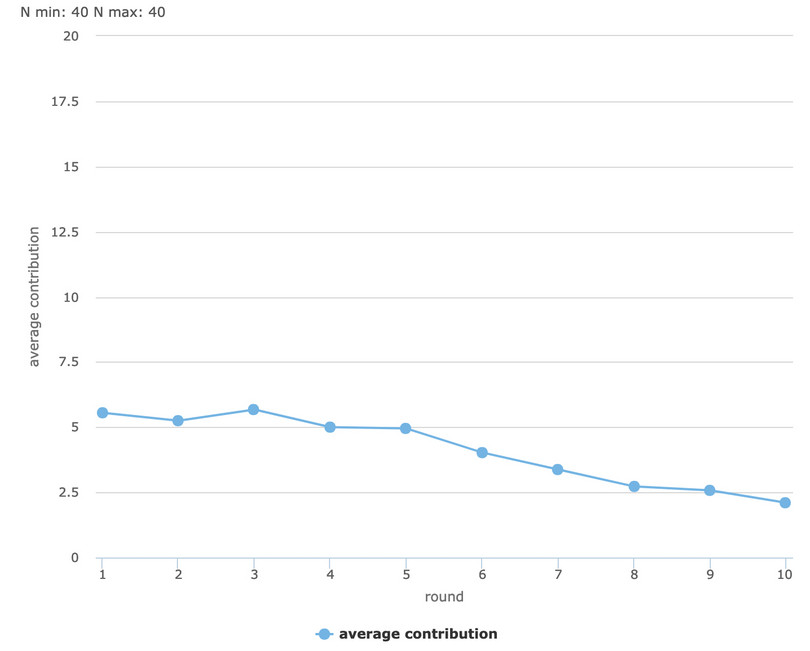
Figure 4.8 Average contribution in a session run without punishments at Pompeu Fabra University on 10 April 2019 in a class of 40 first-year students.
In Figure 4.9 you can see that all groups had some students contributing a positive amount in the initial period, despite the fact that contributing nothing is a dominant strategy. Initial contributions were higher in some groups than in others, showing perhaps different levels of altruism or different expectations about the altruism of others. Many groups followed the declining trend reaching very low contributions by the final period, which is likely to be a response to the free-riding behaviour of other members. This is indeed the reasoning that most of our students gave when asked. However, there are also some groups who managed to maintain high contribution levels and who even increased them for some rounds (see groups 1 and 10). From asking our students, we found out that these cases responded to a large contribution by a single student who expected to pull the others to cooperate in future rounds, sometimes with more success and sometimes with less success.
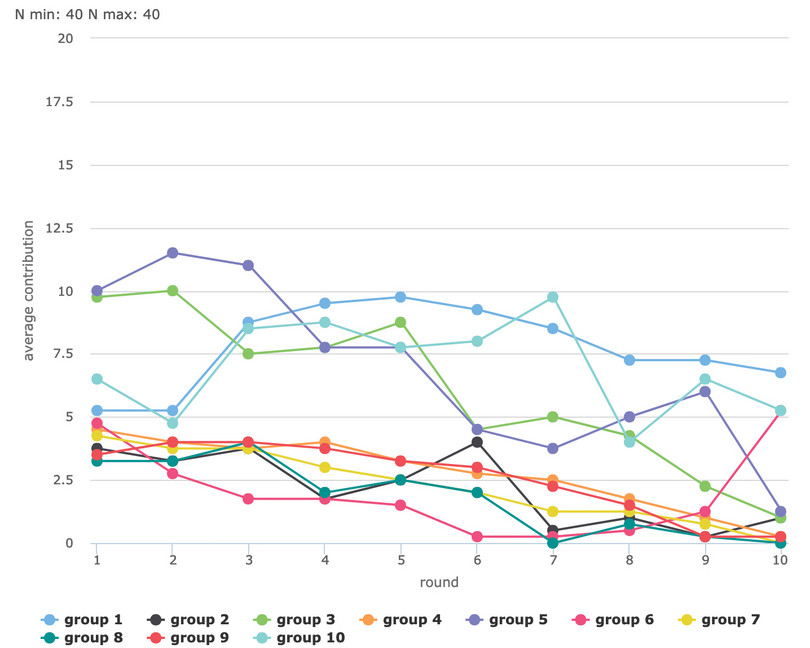
Figure 4.9 Average contribution by group in a session run without punishments at Pompeu Fabra University on 10 April 2019 in a class of 40 first-year students.
All these observations provide good grounds for an active in-class discussion where students reflect on their behaviour and their expectations about the behaviour of others. You can follow the list of questions in Section 4.7 to guide your discussion, and read the experiences of other instructors provided in Section 4.10.
When punishment is introduced, average contributions typically rise sharply in the first or second round, as students respond to the threat of sanctions (see Figure 4.10). This increase is often sustained for several rounds, showing that potential punishment promotes cooperation. Contributions may decline slightly near the end, as less cooperative individuals may attempt to free ride in the final round. Contribution patterns can vary substantially across groups. Punishment will serve as an effective mechanism to initiate and sustain cooperation in most groups, but may not always fully discourage free riding. In cases where reciprocity breaks down, group members may sharply decrease their contributions altogether. These diverse decisions offer a valuable basis for debating issues such as trust, social norms, and prosocial behavior.
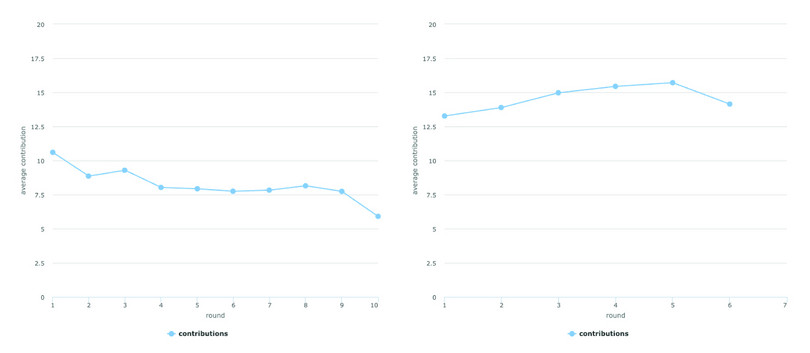
Figure 4.10 Average contributions without punishments (left) and with punishments (right). We observe the sharp rise in average contributions when potential punishments are announced.
Game played online at Pompeu Fabra University on 6 October 2020 with a group of 99 first-year students.
What might go differently?
In this game, maximum gains are obtained when all members cooperate and contribute their whole endowment. This outcome is not obtained because there are individual incentives to free ride on the contribution of others. Besides, students who contribute little or nothing generate disappointing expectations of reciprocity, triggering the observed decline in contributions. In groups where students are particularly prone to cooperation, as it may be the case in small classes, or when individual incentives are not strong enough or sufficiently well defined, the average decline in contributions may not happen, and contributions may even increase as cooperation gets reinforced by previous altruistic behaviour.
In those cases, we like to compare the outcomes in the classroom with Figure 4.14b in The Economy 2.0: Microeconomics, Figure 4.9 in The Economy 1.0, or Figure 2.9a in Economy, Society, and Public Policy, as representative of the common observation. Then we start a discussion with students about the differences, pointing at incentives and altruism.
In very large classes, average contributions still tend to decline, but they may present many different group behaviours, cluttering the average-contribution-by-group graph and hindering its explanation. In those cases, you can classify the groups according to their behaviour, show those with similar paths together, and ask students to come up with explanations for the different patterns. For an example of this, see the second instructor’s experience in Section 4.10 and Figures 4.11 and 4.12 shown there.
Finally, if avoiding communication among students is challenging, you can slightly speed up the pace by reducing the time to make decisions and the time between rounds.
4.7 Discussion
A good discussion following the experiment is important. Ask your students the following questions to frame the discussion.
Interpreting the graphs
Comments in the ‘Predictions’, ‘What might go differently’ section, and in The Economy 2.0: Microeconomics (Section 4.8), The Economy 1.0 (Section 4.7), or Economy, Society, and Public Policy (Section 2.9) provide useful further information.
- Is the line representing contributions constant, or does it decrease?
- Did all groups behave in the same way? What could explain different initial contributions, and the different trends between groups?
Relating the experiment to real life
- Which situations in real life may be similar to the game you just played?
- Are contributions to public goods repeated in time?
- How is this situation (the class experiment) different to the real-life situations we have just discussed?
The game can be related to classical examples of public goods provision like environmental damage and climate change. It can also be related to group projects or team work.
Reflecting on the decisions that players made
- Which of you reduced your contributions after rounds passed, and would you tell us why?
- Did any of you increase contributions? Why?
Try to relate their answer to an economic mechanism. For instance, if the student saw no contribution in the group, this would be similar to not having incentives to give more than others.
A hypothetical situation
- Imagine our local government asks you to contribute to a children’s library in our city to save it from closure. You know you won’t use the library because you wouldn’t personally use the books. Would you contribute?
- Why?
- Would this context change the results of today’s activity? In what ways would the results be different?
Use this situation to discuss altruistic preferences.
Running the game again
- Would the results be different if we repeated the game with the same players?
Link to theory
- Game theory predicts there is a dominant strategy of not contributing. How would you change the models to account for the results from the experiment that we just experienced?
- Would you say the models predict our results well?
- For example, consider the tendency. Does it seem to converge to theory?
- How does your mental process during this game differ from your mental process resolving a theoretical exercise? Does it matter?
Critical evaluation of the experiment
- Which aspects in the experiment did you not like?
- Which assumptions have been used in the experiment?
- How do these assumptions compare to real-life situations?
- Do you think the behaviour would change if the game was played for real money?
There is always a standard argument in the discussion that people would behave differently if the game was played for real money. One option is to play with small payouts, which can be set up in the parameters. Otherwise, instructors can confront students with the result from standard laboratory experiments which look quite similar to the predictions from the ‘Predictions’ section.
4.8 Homework questions
These questions can be set for students to work on outside the classroom or can be completed and discussed in the classroom. They may help students reflect on their experience and understand theirs and others’ behaviour in the experiment.
Data from your experiment can be downloaded as an Excel file from the ‘data’ menu in the instructor’s screen in classEx. You can use this data to create your own questions. A description of the data variables can be found in the ‘Downloading the data from your experiment’ section.
The following text is also available in the students’ version.
Remember that each participant receives 20 tokens in each round.
- Assume the other three participants in your group are contributing everything in the first round.
- What is your payoff if you contribute everything?
- What is the total payoff in this case for all participants?
- What is your payoff if you contribute nothing?
- What is the total payoff in this case for all participants?
- Now let’s assume the other three participants are contributing 10 tokens in the first round.
- Answer questions 1a–d again.
- What can you conclude about the statement ‘My expectation of the contributions of others’ does not matter in the public goods game.’
- Free riders
Hint: For question 3, which values do you have to change to make it not a social dilemma?
- Describe what is meant by ‘social dilemma’ and ‘free rider’.
- What parameters of the game are responsible for the social dilemma?
4.9 Further reading
Also available in the students’ version.
- ‘Games people play’ (The Economist, 20 January 2015) explains how the proportion of self-interested, cooperators and reciprocators can determine the equilibrium outcome (based on Kurzban, Robert and Houser, Daniel. 2025. ‘Experiments investigating cooperative types in humans: A complement to evolutionary theory and simulations’. PNAS 102 (5): pp. 1803-1807).
- ‘The usefulness of managers’ (The Economist, 13 October 2019) presents a variation of the game to study the influence of managers in the contribution to public goods (based on Billinger, Stephan and Rosenbaum, Stephen M. 2029. ‘Discretionary mechanisms and cooperation in hierarchies: An experimental study’. Journal of Economic Psychology 74).
- Henrich, Joseph et al. 2006. ‘Costly Punishment Across Human Societies’. Science 312 (5781): pp. 1767-1770 shows that punishing deviators is a common feature in all societies. Although punishments vary across societies, more altruistic groups are more willing to pay the cost of punishing non-cooperators.
- CORE The Economy 2.0: Microeconomics, Section 4.8.
- CORE The Economy 1.0, Section 4.7.
- CORE Economy, Society, and Public Policy, Section 2.9.
4.10 Instructor experience
In this section, we hear from instructors about their experience of running the experiment with their students.
Marcus Giamattei Bard College, Berlin, Germany
I use the public goods game in a principles of economics course to start the chapter about public goods, common resources and externalities.
I play the public goods game directly in the first lesson of the chapter as an ice breaker. It allows students to understand the crucial dilemma situation and still remains a very simple game. As the first game in the lecture, I use it without the punishment option and only play 10 rounds of the original public goods game. I prefer this approach of teaching first by experience and discuss the theoretical issues and the model only afterwards to start with an intuitive approach to the problem.
After playing the game, I start with a discussion about the personal strategy within the game and a discussion about the implications for the group. For quite some time the focus should be on the actual play and the own behaviour in the game before broadening the implications. This is followed by some general questions about the Nash equilibrium and the role of expectations. I also discuss how repetition can influence the result. Students have quite a hard time understanding the problem, namely that it is in their best interest to play selfishly because they see the high social payoff and have to learn to choose between the individual and collective rationale.
The advantage is that the game follows the parameters from the original game exactly so that after playing the game and discussing the class results, students can be confronted with the results from the original study and the replication of these settings over many countries allow a broad discussion.
After that discussion, I normally do another game about common resources (which is also implemented in classEx—the fishing pond. Those two games are then the framework to discuss different types of goods together with excludability and rivalry. Later, I return to the public goods game and use a version with punishment. Peer punishment can be shown easily within the public goods setting. This then allows another discussion about different solutions to the social dilemma.
Humberto Llavador Universitat Pompeu Fabra, Barcelona, Spain
I have used this experiment both in the classroom and online. I run it before starting Unit 4 of The Economy, as it helps put students in the right mindset to engage with the concepts presented there. I like to combine it with two other games—the prisoner’s dilemma and the ultimatum game (see Experiment 1). I run the games in that order, progressing from easier to more challenging, and finish with 5 to 6 rounds of the public goods game with punishments. Running all three games, including instructions, takes about 40–50 minutes. I do not send the instructions beforehand.
In a classroom session with a smaller group of around 40 students, I start the discussion immediately after the experiment. First, I encourage students to discuss their individual choices among themselves. Before revealing any results, I ask them what they expect to observe and why. Then, I show the graph of the results, and we compare them with their expectations, trying to explain any discrepancies. Finally, I ask students to identify real-life situations that reflect the dilemma illustrated by the game. Note that this session is conducted prior to introducing Unit 4, meaning the students have not yet seen game theory or the concept of social dilemmas.
In the online session, where there are over one hundred students, the three games take approximately the same amount of time as in the classroom setting. I also run the experiments before Unit 4, but withhold the results until a later in-person discussion with smaller groups, once students have completed that unit. This scheduling adapts to course logistics while maximizing the benefits of smaller in-person sessions. In these sessions, I display the graphs without and with punishments (see Figure 4.10), reinforcing the concepts students have studied in the book. Then, I shift the focus to the differences across groups (Figure 4.11). Before the in-class discussion, I organize groups exhibiting similar behavior patterns (Figure 4.12). During the discussion, we analyze and interpret these patterns together.
In both online and classroom settings, students readily grasp the social dilemma they experienced, as well as key concepts such as free riding, reciprocity, and cooperation. They also reflect thoughtfully on the challenges involved in achieving and sustaining the socially optimal outcome.
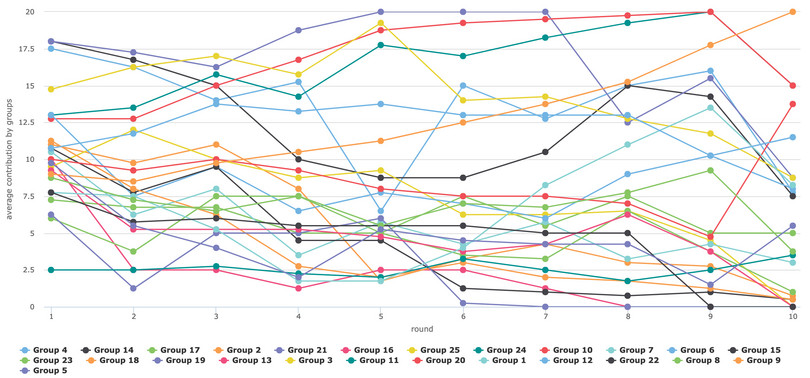
Figure 4.11 Average contribution by group, showing all the groups together.
This session ran online without punishments at Pompeu Fabra University on 6 October 2020 with a group of 99 first-year students.
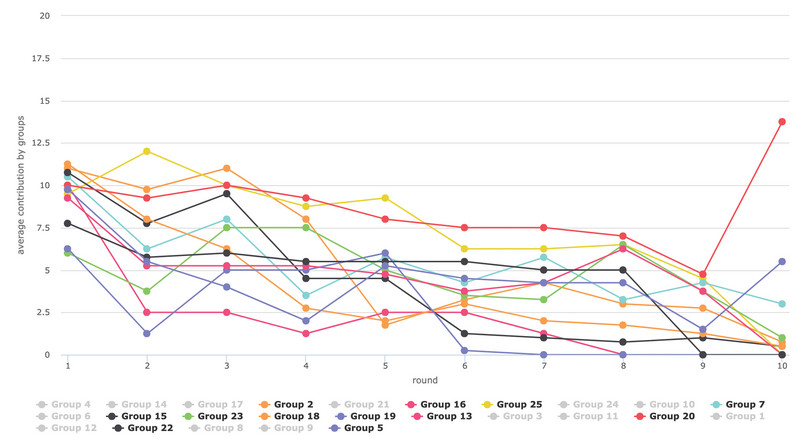
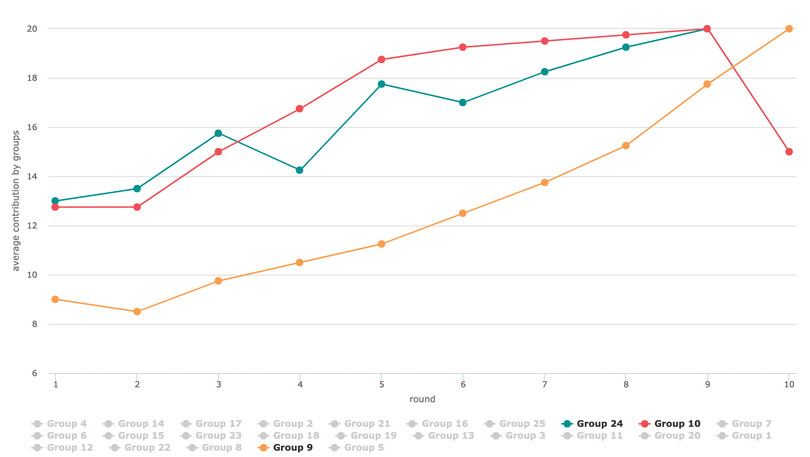
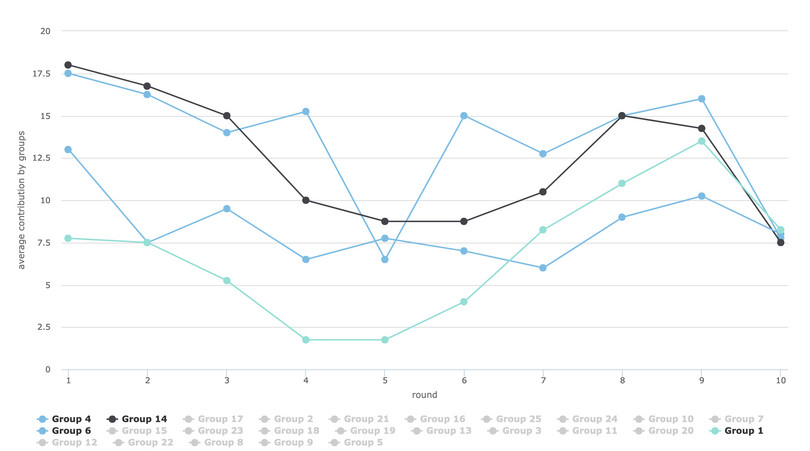
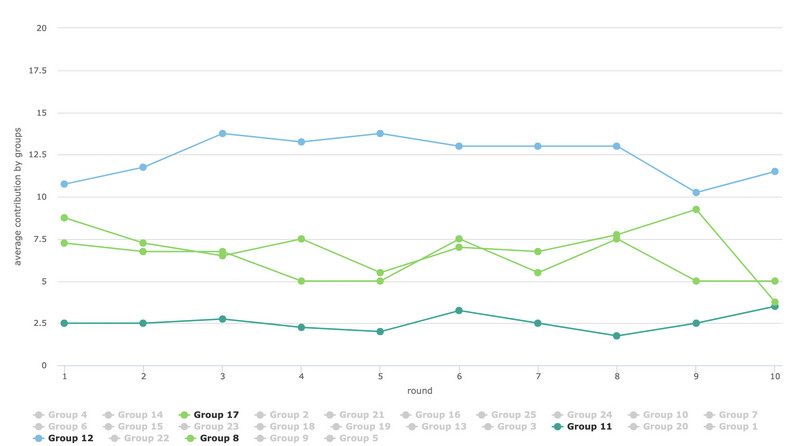
Figure 4.12 Average contribution by group. The groups are sorted into four categories according to their behaviour. Group 25 (not classified) combined high and increasing contributions for the first seven rounds (cooperation) with a fast and sharp decline later on. The session ran online without punishments at the Pompeu Fabra University on October 6, 2020 with a group of 99 first-year students.
Declining contributions
Cooperation
Reacting
Steady contributions
